Mythology & Sky ยท Pegasus

Pegasus: The Winged Horse

A Greek myth lesson for story, wings, clear springs, noble courage, and the stars.

For ages 5-9. Keep the myth beautiful, concrete, and child-safe.

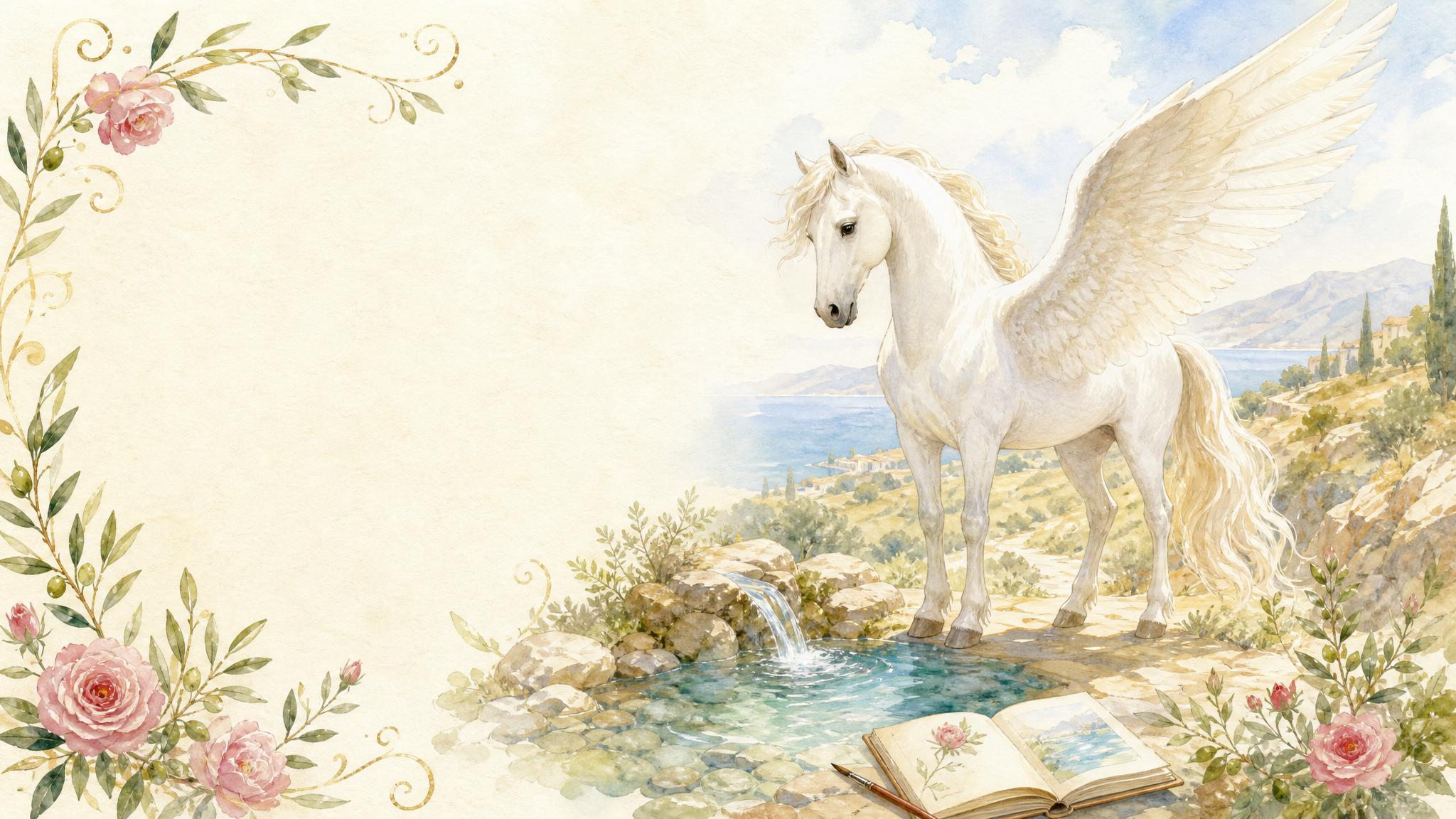
Watercolor of Pegasus beside a clear spring on a Greek hillside

Aim

To introduce Pegasus as a living picture from Greek myth: a winged horse who carries imagination upward, strikes a spring from stone, and later becomes a constellation in the night sky.

The child should leave with one clear sentence: Pegasus is the winged horse of story and stars.

By Age

Littles (3-6): tell only the gentle story: the winged horse, the spring, the stars. Let them move, paint, and play.

Olders (7+): add Greek mythology, vocabulary, map work, constellation work, narration, and a short copywork sentence.

Materials

  • A candle for the opening verse
  • Blue or white cloth for the lesson table
  • A small bowl of clean water
  • One white feather, if you have one
  • Watercolor paper, brush, water jar, blue, gold, and rose paint
  • Beeswax crayons or colored pencils
  • A star chart or night-sky app for parent reference

Opening Verse

Hoof on stone and wings in light,
Pegasus climbs the morning height,
Spring below and stars above,
Carry our thoughts toward what we love.

The Lesson Table

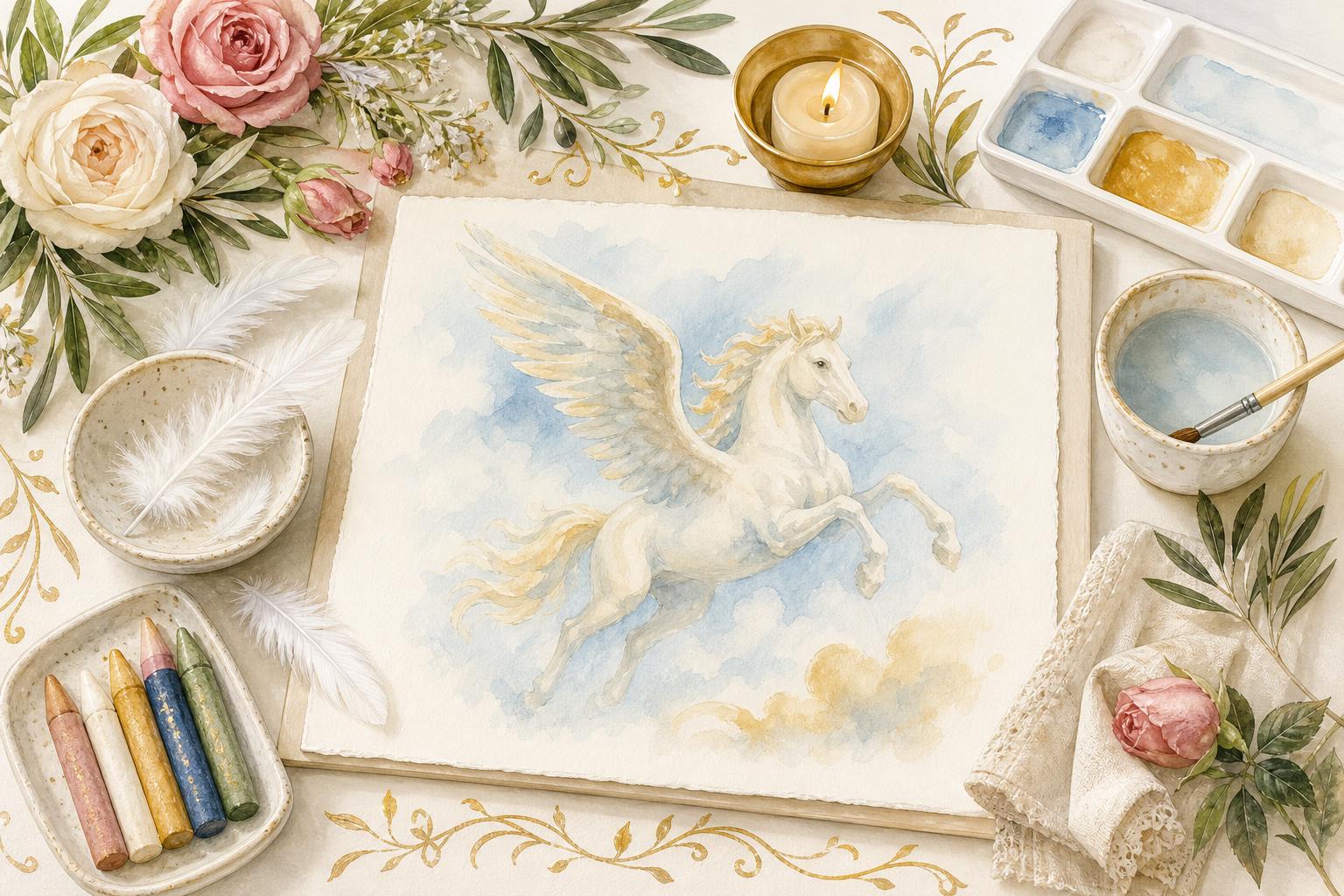
Watercolor table set with Pegasus lesson materials, paints, candle, feathers, and cloth

Lay the blue or white cloth on the table. Set the bowl of water in the center with the feather beside it. Light the candle for the verse, then tell the story slowly.

The table picture is simple: water for the spring, feather for the wings, candle for the upward light.

The Story

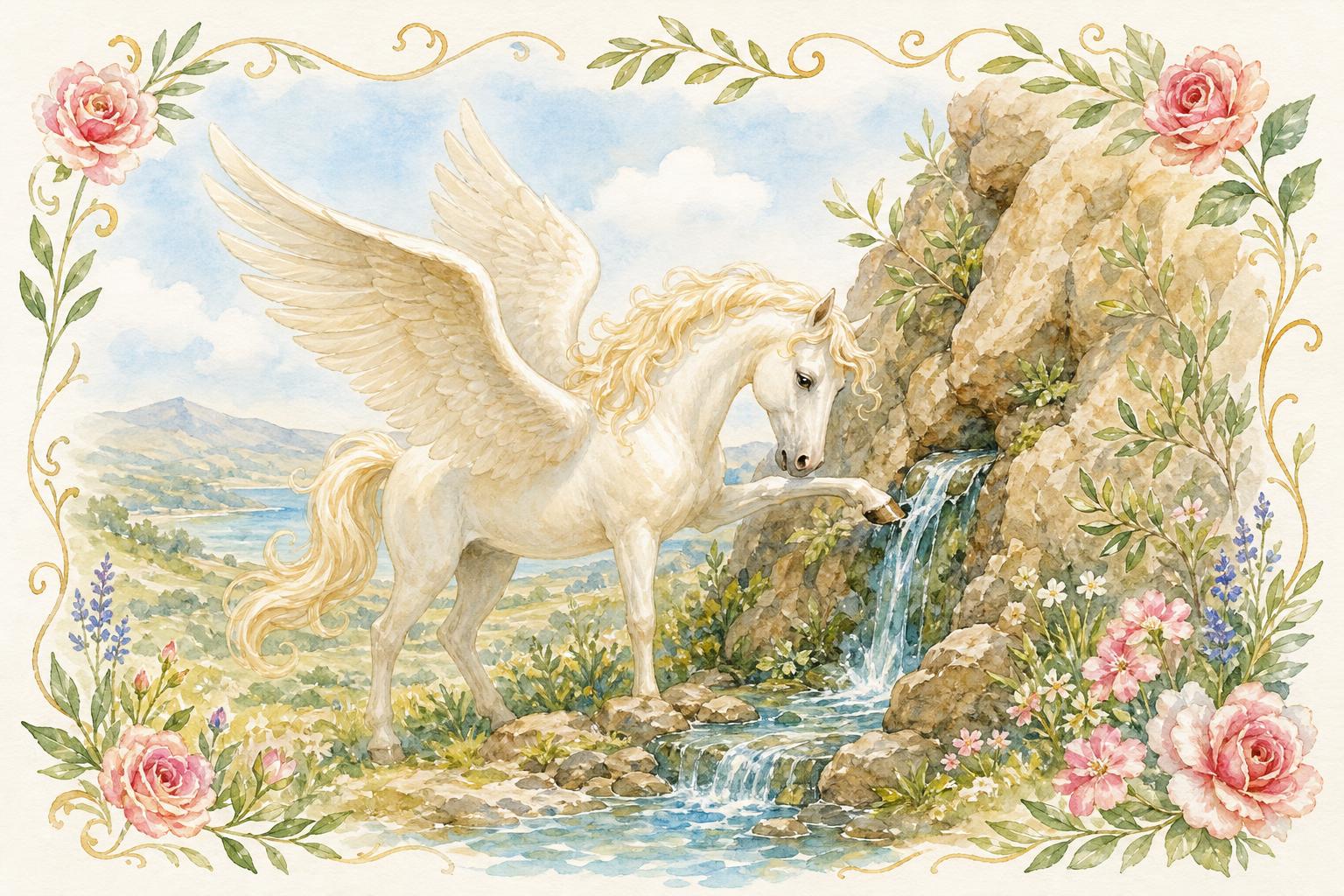
Watercolor Pegasus striking a spring from a rocky hillside

Long ago, in the old Greek stories, there was a horse unlike any other horse. He was white as morning cloud, strong as mountain wind, and from his shoulders grew two great wings.

His name was Pegasus.

Pegasus did not belong in a stable. He moved between earth and sky. His hooves could touch the stone path, and then, with one lift of his wings, he could rise above the hilltops where the air was clear and bright.

One day Pegasus came to a dry rocky hillside. The grass was thirsty. The flowers bowed their heads. The birds were quiet because the land had no water.

Pegasus lowered his head and listened. Then he lifted one shining hoof and struck the stone.

From the place where his hoof touched, water sprang out: clear, cold, and singing. It ran down the hillside in a silver thread. The grass stood up. The flowers opened. The birds began again.

People remembered that spring for a very long time. They said it was a spring for poets and singers, for anyone whose thoughts needed to rise like wings.

And when Pegasus had finished his work on earth, the old story says he rose so high that he found a place among the stars. On clear nights, people looked up and remembered him: the winged horse, carrying wonder across the sky.
Narration

Ask for one remembered picture, not a quiz. What did you see in your mind?

For olders, ask them to retell the story in three parts: Pegasus in the sky, Pegasus at the stone, Pegasus among the stars.

Copywork: Pegasus is the winged horse of story and stars.

Movement

Move the story before writing about it. Walk slowly like a horse: four steady beats. Then stretch arms wide for wings and move lightly around the room. Stop at the rocky hill, lift one foot, and tap the floor once for the spring.

Olders can clap the rhythm: Pe-ga-sus flies / hoof makes spring / stars shine bright.

Watercolor Painting

Wet the paper. Let pale blue move across the page first. Add a soft golden hill while the page is still damp. When it dries, draw Pegasus simply with crayon or pencil: horse body, lifted head, two wings, one hoof near the spring.

For littles, skip the outline. Let blue become sky and water; let gold become hill and light.

Vocabulary

Myth: an old story that carries meaning.

Pegasus: the winged horse from Greek myth.

Spring: water that comes up naturally from the earth.

Constellation: a group of stars people picture together in the sky.

Muse: in Greek stories, a spirit of poetry, music, memory, or art.

Sky Watching

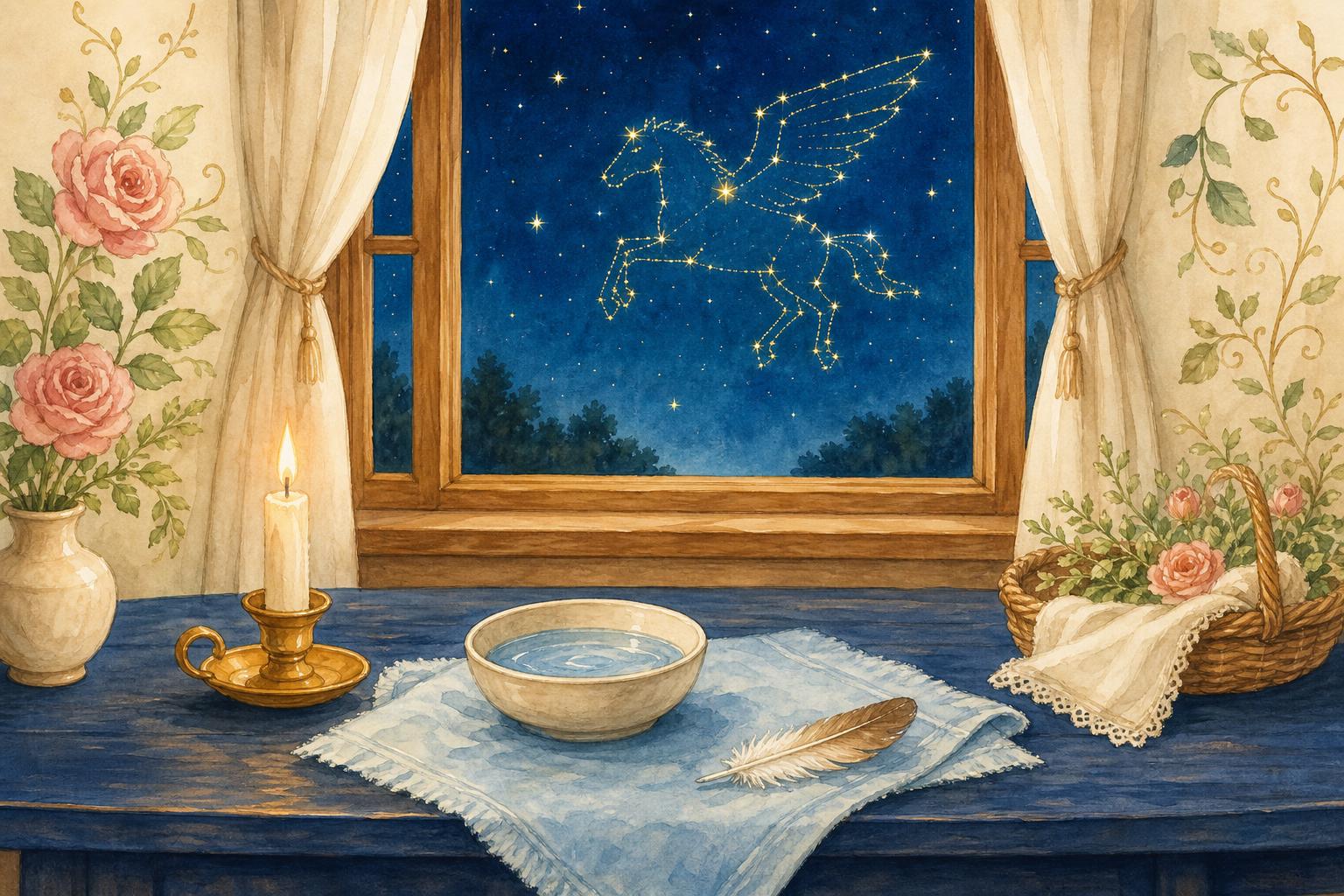
Watercolor nature table by a window with Pegasus stars in the night sky

On a clear evening, go outside and look for a large square of stars. Pegasus is often found by the Great Square of Pegasus. The parent can find it first, then point out the shape simply.

For young children, do not worry about perfect identification. The main lesson is this: old stories live in the sky, and the sky is worth looking at.

Map Work

Show Greece on a map. Say: This story comes from the ancient Greek world, near the Mediterranean Sea.

Olders can find Greece, the Aegean Sea, and Mount Helicon, the mountain linked with the spring Pegasus struck in the old stories.

Spiritual Meaning

For the parent:

Pegasus is a clean image for inspired thought: not fantasy as escape, but imagination that rises and then returns with water for the earth. The lesson keeps beauty tied to usefulness.

For the child, keep it simple:

Good stories give our thoughts wings, and good work brings water to thirsty places.

Closing Verse

Spring below and stars on high,
White wings crossing evening sky,
Hoof and feather, water bright,
Thank you, story, for your light.

Extension Ideas

  • Make a Pegasus nature table with blue cloth, feather, candle, and bowl of water.
  • Build Pegasus from blocks, cloth, and two paper wings.
  • Draw the Great Square of Pegasus with gold stars on dark blue paper.
  • Olders: compare Pegasus with another noble horse from literature or history.
  • Add the word constellation to a family sky notebook.

Parent Note

Greek mythology can become too violent too quickly for young children. For this age, keep Pegasus himself at the center: beauty, wings, spring, stars. Save the harder parts of the surrounding myths for later.